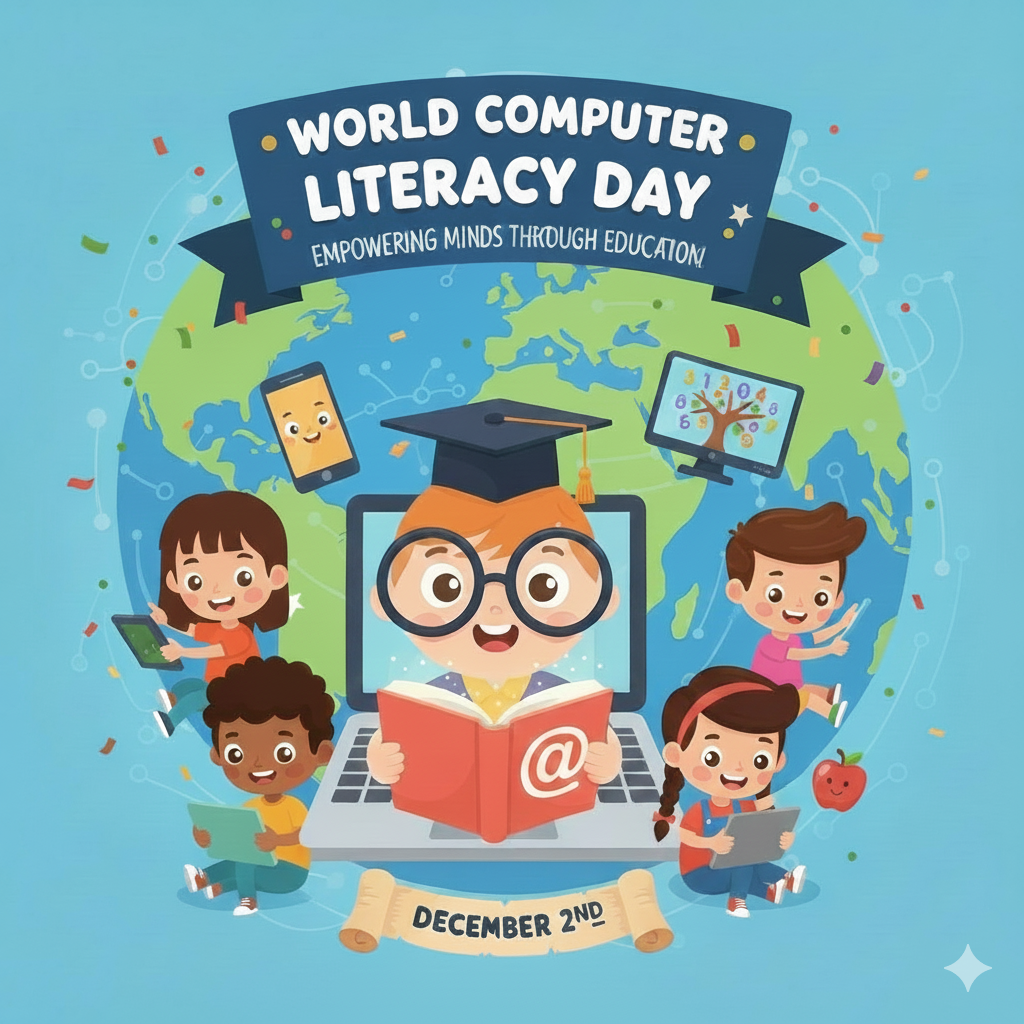
December 2nd is World Computer Literacy Day. A day to promote computer literacy, computing education, and highlight the importance of digital skills in a modern world. Founded by The National Institute of Information Technology (NIIT) in 2001, an Indian multinational corporation that provides training, development, and vocational education in information technology, the day was initiated in 2001 to mark its 20th anniversary and address the gender gap in computer literacy at the time.
What started as an initiative intended to encourage the development of technological skills, particularly among children and women in India, has since expanded with aims to “create awareness and drive digital literacy in underserved communities worldwide.”
World Computer Literacy Day Seeks to:
- Spread computer education among all age groups.
- Focus on bridging the digital divide, especially in rural and low-income areas.
- Encourage women’s participation in digital learning.
- Promote safe, responsible, and skill-based use of technology.
- Highlight the importance of digital literacy for education and jobs.
- Motivate schools and institutions to organize awareness programs and workshops.
- Support global efforts to make digital resources affordable and accessible.
- Remind the world that digital skills are essential for future opportunities.
Each year, NIIT develops a theme for educators and organizations to focus on. This year’s theme is “Digital Skills for an Inclusive Future,” which highlights the global need to ensure that every person – regardless of age, gender, location, or economic background – has access to the digital knowledge required to participate confidently in the modern world. This theme encourages organizations and communities to:
- Expand digital learning opportunities for underserved and rural populations.
- Promote basic and advanced computer skills among students, teachers, and lifelong learners.
- Strengthen women’s digital empowerment, helping bridge gender-based digital gaps.
- Ensure safe and responsible use of technology, including cybersecurity awareness.
- Support inclusive digital infrastructure, such as affordable devices and internet access.
- Develop future-ready skills, including coding, digital communication, critical thinking, and online collaboration.
Observing World Computer Literacy Day
Wondering what you can do to promote computer literacy? Here are a few fun and simple ideas to try at home, or school for World Computer Literacy Day:
Teach a family member something new like:
- Show them how to create a digital document
- Using an app on their phone
- Make a phone call with a video call app
- Leaving a comment on a blog or video
- How to shut down or restart their device
- How to update apps on their phone
Create a “Digital Rules” poster. Use a drawing app or a presentation tool to design a poster with your personal rules for using the computer and internet safely.
Challenge yourself to explore a new digital skill:
- Experiment with a beginner coding platform
- Try a typing game to improve speed
- Make a simple slideshow about your favourite hobby
- Explore a drawing or music-creation app
- The idea is to move from “I use computers for fun” to “I use computers to learn and create.”
Organize a project and create something with a friend or family member using computers, such as:
- A short animated story
- A simple game
- A digital poster about something you’re passionate about
- A quiz about your favorite subject
World Computer Literacy Day is a reminder that digital skills are essential for navigating today’s world, and schools play a significant role in promoting computer literacy from an early age. Teachers equipped with digital skills can enhance the learning experience for all students by integrating computer education in the curriculum and preparing students for future academic and career challenges. By promoting computer literacy, we contribute to a more inclusive society where everyone has the tools they need to connect, learn, and grow.